- Administration
- Company settings
- Display
- Integrations
- API and Webhooks
- Locker integration: lock system API requirements
- External API: get users
- Incoming webhooks API reference
- Outgoing webhooks API reference
- External API: update user schedule status
- External API: monitoring
- External API: get bookings
- External API: User sync via SCIM
- What are webhooks and how do you use them to automate processes?
- Outgoing Webhooks setting up guide
- Incoming Webhooks setting up guide
- Connecting the meeting room calendar
- How calendar synchronisation works
- Exchange service account with impersonation rights
- Microsoft Entra application: registration and permissions
- On-premise Exchange: how calendar synchronisation works
- Microsoft 365 cloud: how calendar synchronisation works
- Microsoft calendar synchronisation: choosing an option
- Create a resource calendar in Office 365
- Create a resource calendar in Google Workspace
- Connect a meeting room calendar to on-premise Exchange
- Connect a meeting room calendar with a Microsoft 365 service account
- Connect a Google Workspace calendar to a meeting room
- Meeting room calendar: connection options overview
- Connect Microsoft 365 via a Microsoft Entra application
- Connect Microsoft Exchange via impersonation
- Office 365 meeting names fix
- Prepare Microsoft 365 calendar to work with UnSpot
- Prepare Google calendar to work with UnSpot
- Prepare Exchange calendar to work with UnSpot
- User sync
- Importing users from a CSV file
- OpenID Connect: creating users at first sign-in
- How to choose a user synchronization method
- Set up user provisioning via SCIM 2.0 (Entra ID, Okta)
- Set up user sync with Google Workspace
- Set up user sync with Entra ID (Azure AD) via Graph API
- Set up user sync with Active Directory (AD LDAP / OpenLDAP)
- External API: User sync via SCIM
- User provisioning via SCIM 2.0 (Entra ID, Okta): how it works
- User sync with Active Directory (AD LDAP / OpenLDAP): how it works
- User sync with Entra ID (Azure AD) via Graph API: how it works
- User sync with Google Workspace: how it works
- People management
- Office attendance mode and the attendance target
- Employee subordination: overview
- Subordination in analytics and reports
- What a manager can do: bookings, schedules, requests
- The direct manager in the employee profile
- Subordinates and teams in the employee profile
- Subordination through the organisational structure
- Assigned seats, priority and the booking horizon
- Workspace access through the organisational structure
- Access Groups: rules and configuration options
- Configuring resource access rights: all settings
- How workspace access rights work
- Workspace access rights: overview
- User Roles
- Service requests
- Workspaces management
- Check-in
- Booking control scenarios: four ready-made setups
- Booking control: overview
- Meeting room check-in: how it works and how to set it up
- Desk and parking check-in: one shared setting
- Check-in settings for a space and a meeting room
- Check-in methods: how to verify office presence
- How booking control works
- Booking control: settings reference
- Office map
- Points of interest on the map
- Office map editor: an overview of the actions
- Parking spaces on the map
- Meeting rooms on the map: placing, swapping and hiding
- Desk pods: creating, editing and ungrouping
- Desks on the map: adding, configuring and deleting
- The floor plan: upload, replace and delete the map
- Map editor: configuring placed objects
- Printing the office map
- Publishing a seating draft
- Map editor: placing objects
- Seating drafts: create, duplicate and delete
- Seating drafts: overview
- Assigning a desk to an employee
- Desk types
- Workspaces
- Holders mounting
- Reports and analytics
- Employee analytics
- By employees analytics: the three charts and their calculation
- By employees analytics: overview
- By employee analytics: cancelled bookings and attendance check
- By employee analytics: office attendance and work schedule
- By employee analytics: filters, period and employee selection
- By employee analytics: overview
- Office analytics
- By desks analytics: overview
- On the map analytics: workplace usage heatmap
- By desks analytics: filters, period and export
- By desks analytics: how the report is built
- By office analytics: PACS data
- By office analytics: lockers
- By office analytics: meeting rooms
- By office analytics: desks and parking
- By office analytics: filters and period
- By office analytics: overview
- On the map analytics: overview
- Meeting Rooms analytics: room workload
- Reports and exports
- Tariff
- By employees analytics: the three charts and their calculation
- By employees analytics: overview
- By desks analytics: overview
- On the map analytics: workplace usage heatmap
- By desks analytics: filters, period and export
- By desks analytics: how the report is built
- By employee analytics: cancelled bookings and attendance check
- By employee analytics: office attendance and work schedule
- By employee analytics: filters, period and employee selection
- By office analytics: PACS data
- By office analytics: lockers
- By office analytics: meeting rooms
- By office analytics: desks and parking
- By office analytics: filters and period
- By office analytics: overview
- Resources report
- By employee analytics: overview
- On the map analytics: overview
- Meeting Rooms analytics: room workload
- Reports
- Tariff analytics: limits, modules and subscription term
- Selection of equipment
- User
- Using UnSpot
- Where the work mode and status are visible
- Colleague search and viewing their schedule
- Teams in the schedule and subordinates’ schedules
- Subscribing to colleagues in the schedule
- Work schedule notifications
- Work schedule template
- Statuses in the schedule: setting them and the effect on bookings
- Confirming your booking (check-in)
- How to submit a service request
- Service request for a meeting
- Request for an office object and by QR code
- Service request for an employee
- Service requests: overview
- Push notifications
- Work schedule: section overview
No matching articles
3 simple steps to start using UnSpot
Step 1. Add your Office
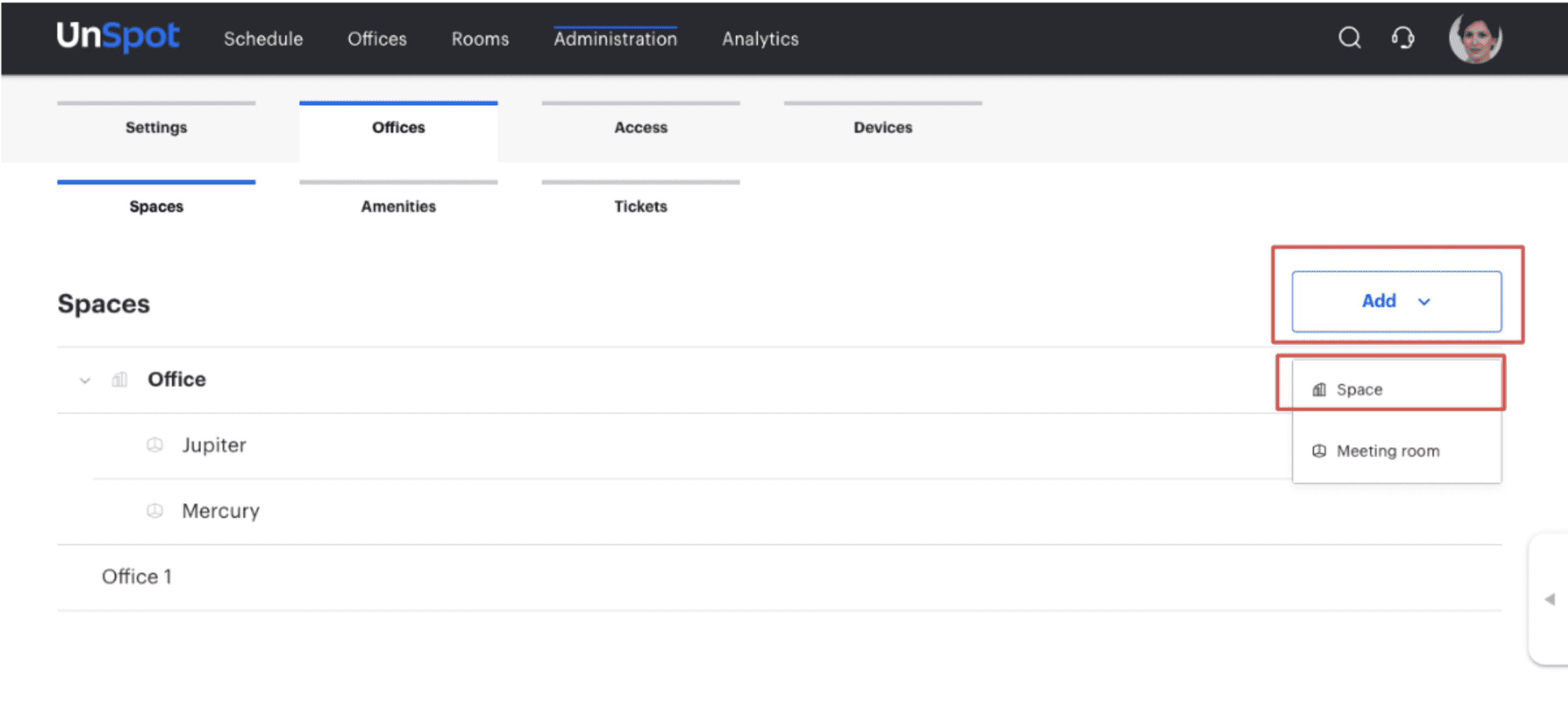
- Open the office administration page
- Click the “Add” button and select the “Space” option
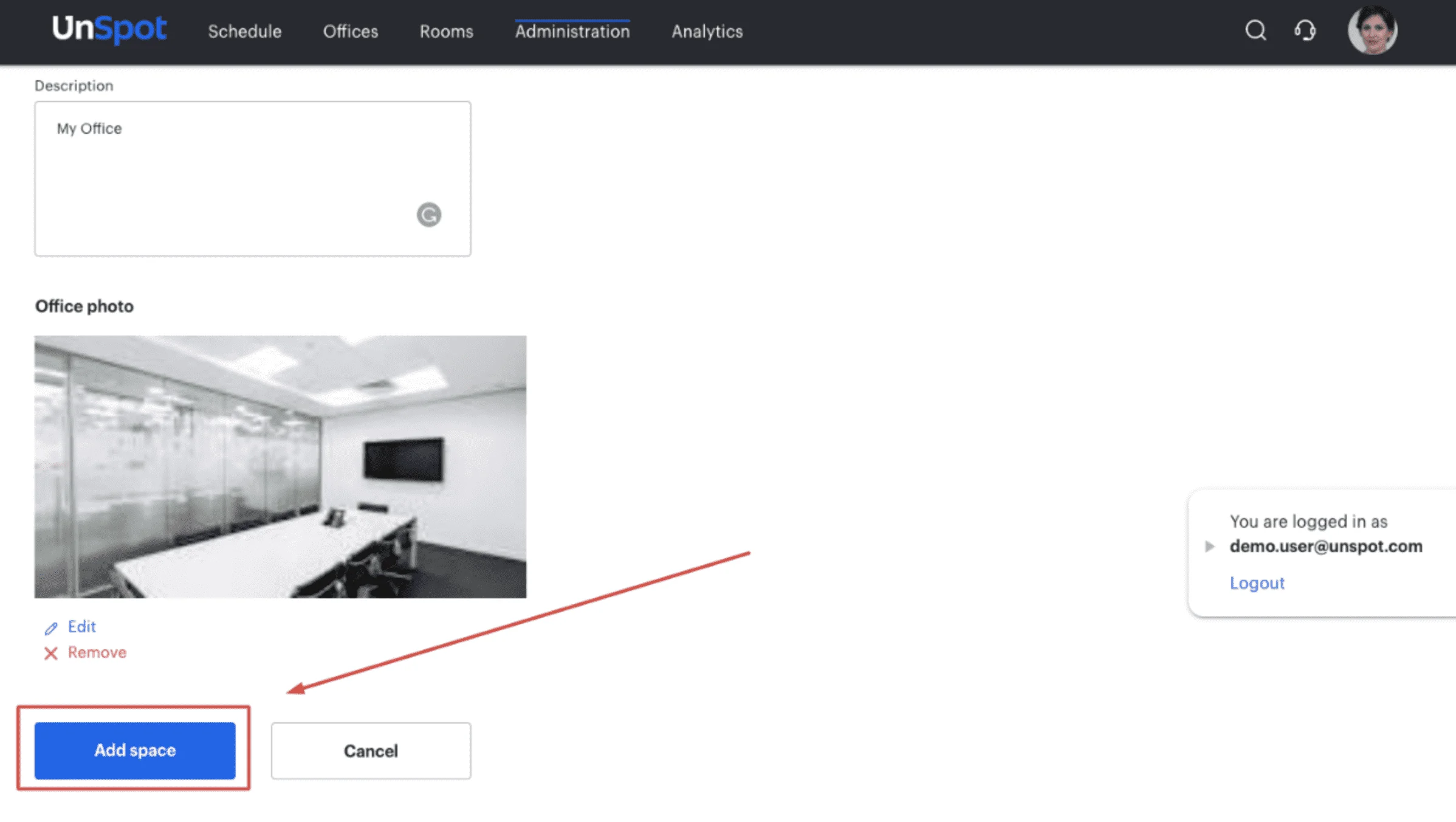
- Enter the name of the office. Optionally, you can add an address, description, photo, and time zone.
- Click “Add Space”
Step 2. Add an office map and add desks
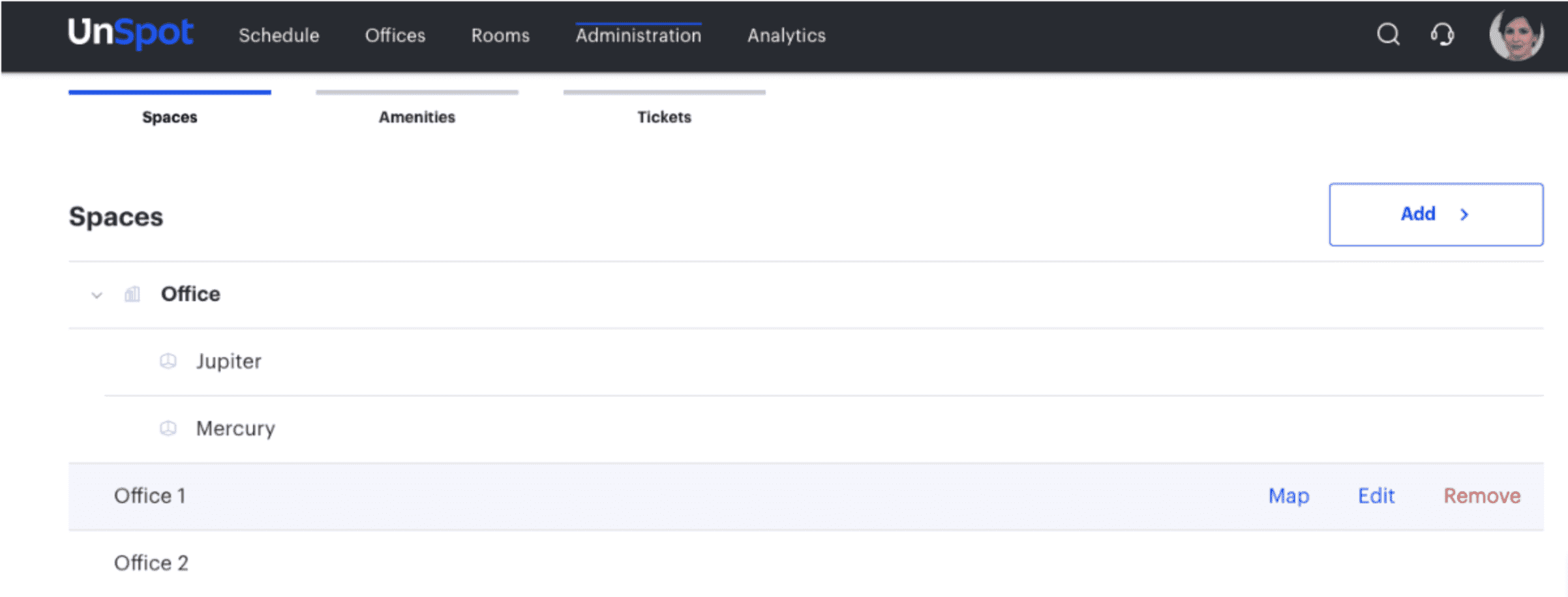
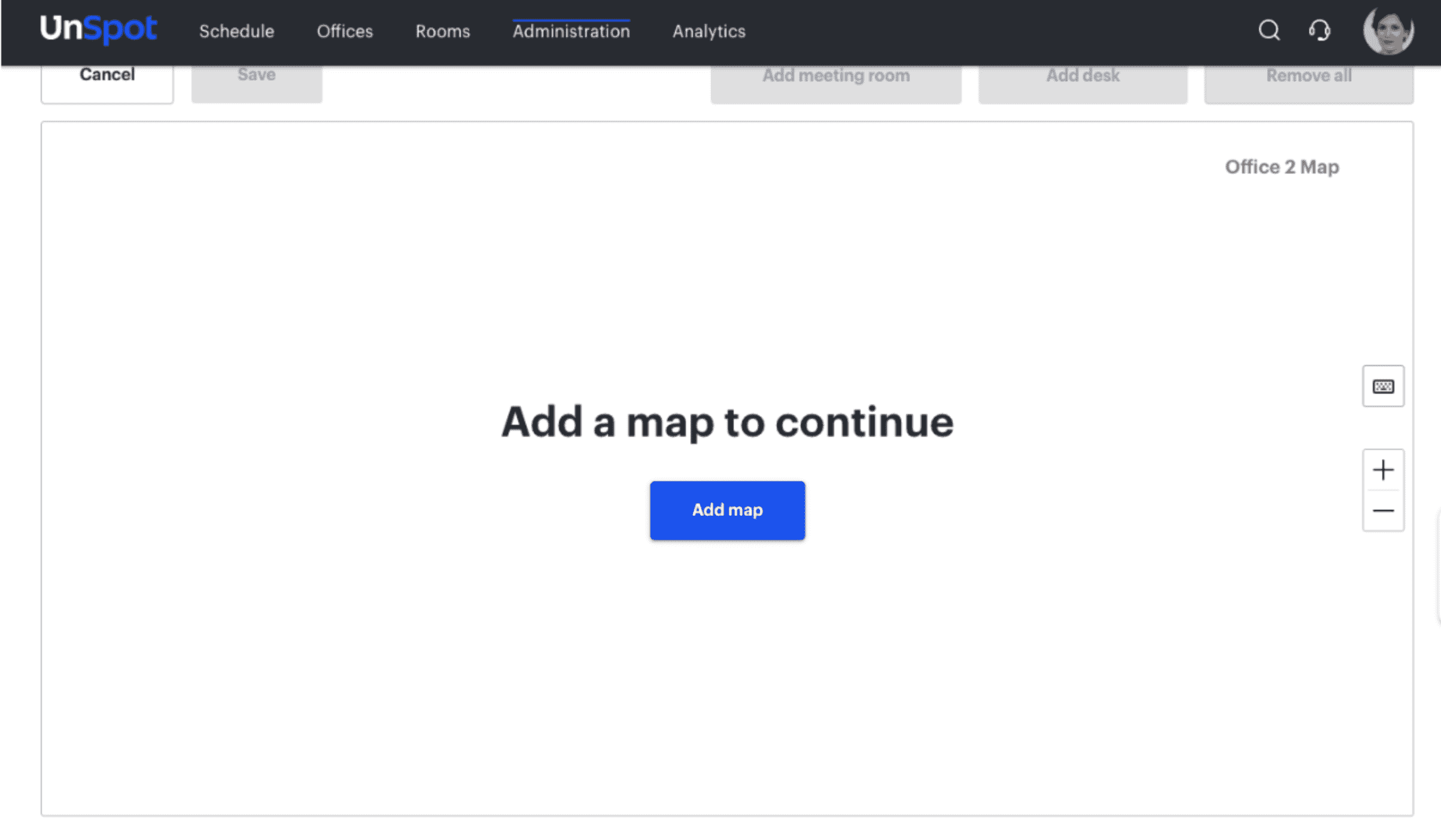
- Open the list of offices, hover over the office you need, and click on “Map
- Click on the “Add map” button and upload your office plan. If you do not have an office map, we will create one for you for free. To order a map, just book a short meeting with our manager.
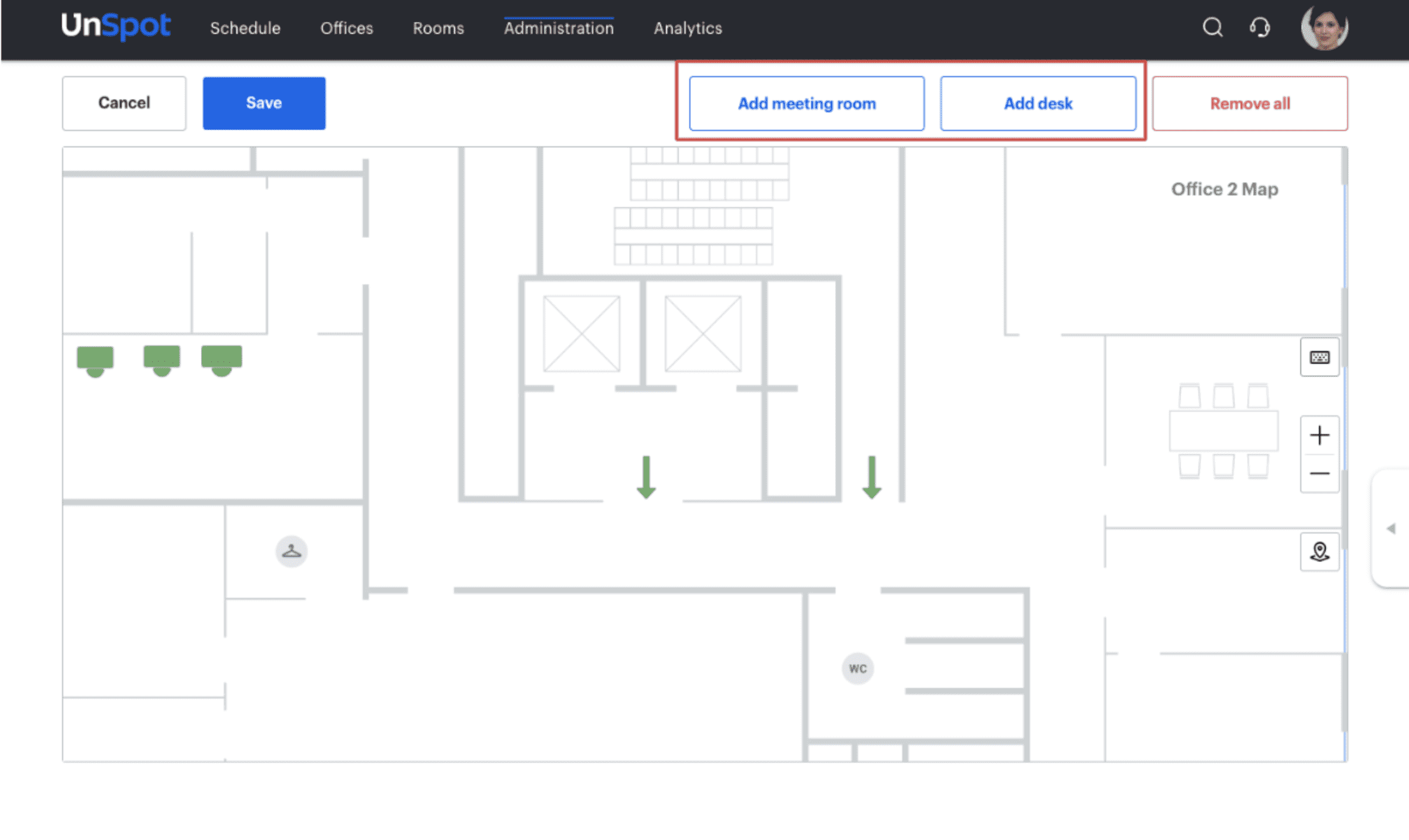
- Add your desks and meeting rooms on the map
Step 3. Add your employees and start booking desks
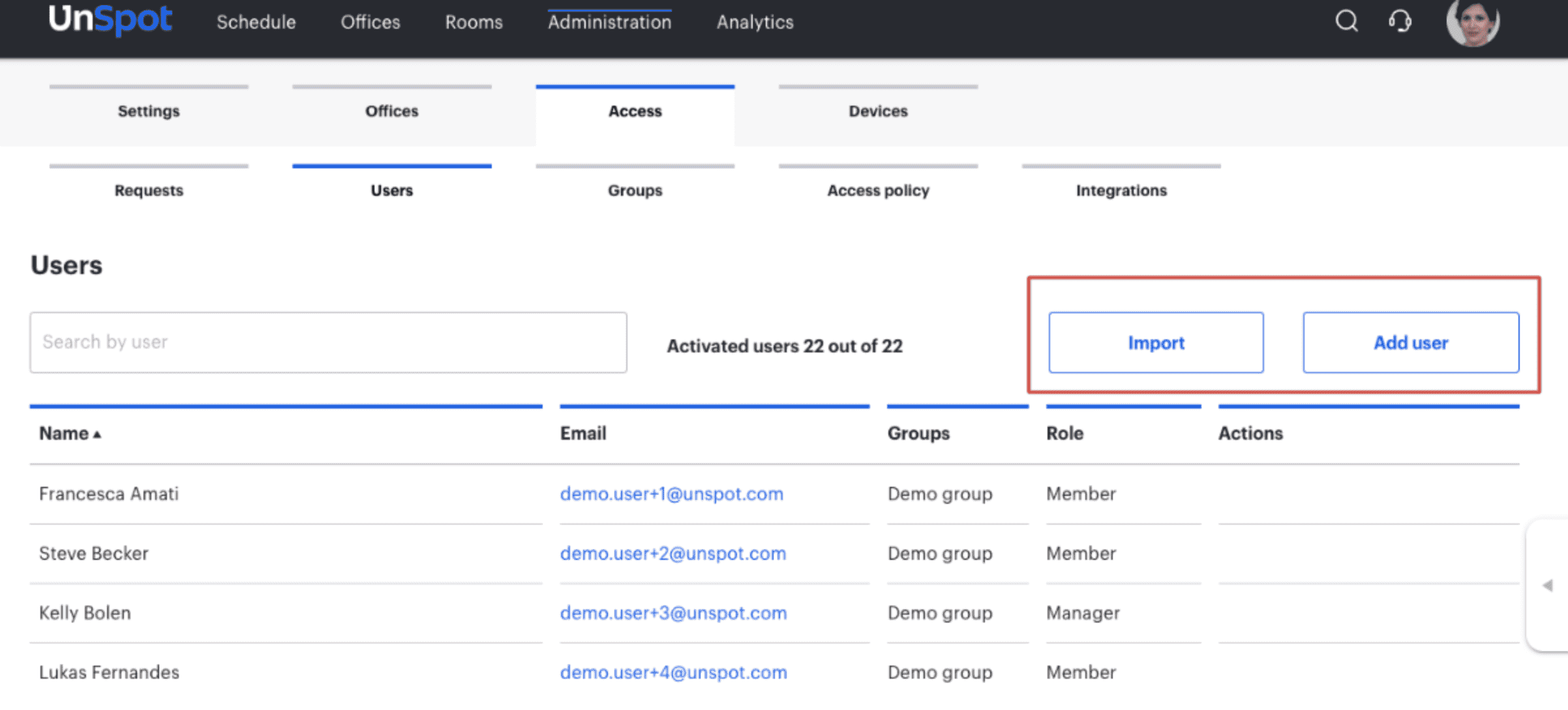
- Open the “Manage” section, click on the “Access” button and click on the “Users” button

- Upload a list of users in a CSV file using the Import button or add users one by one using the “Add user” button
- Congratulations! Now you and your employees can go to the “Offices” section and start booking desks